


Bluetooth Heating Controller PCBA: Market Data & Trends
Key Takeaways
- Cost Efficiency: Bluetooth adoption lowers BOM costs while simplifying mobile-first HVAC commissioning.
- Market Growth: Strong double-digit CAGR driven by BLE 5.x features and US retrofit demand.
- Thermal Resilience: Industrial-grade components ensure reliability in high-heat environments up to 105°C.
- Design Focus: Integrated SoCs and Mesh technology enable seamless multi-zone heating synchronization.
Bluetooth Heating Controller PCBA: Market Data & Trends
Introduction — Connected heating control is shifting toward low-power, mobile-first architectures led by Bluetooth radio adoption. Evidence suggests that multiple industry reports and vendor-agnostic market studies show rising shipments of smart heating controllers and retrofit kits, with Bluetooth implementations gaining share due to lower BOM cost and simpler mobile commissioning. For product teams and contract manufacturers, understanding the specific tradeoffs of a Bluetooth heating controller PCBA is now central to product roadmaps and procurement decisions.
Market Insight — As connected heating deployments accelerate, Bluetooth-enabled controller PCBAs are poised to capture a growing share of retrofit and new-build HVAC projects. Market analyses consistently indicate mid-single to low-double digit CAGRs across smart thermostat and connected heating segments, driven by falling BLE module prices and richer BLE 5.x feature sets. This combination — lower component cost, improved link budget, and user expectation for seamless mobile control — creates a favorable window for Bluetooth designs in the US market.
1 — Background: What a Bluetooth Heating Controller PCBA Is
Definition & Core Components
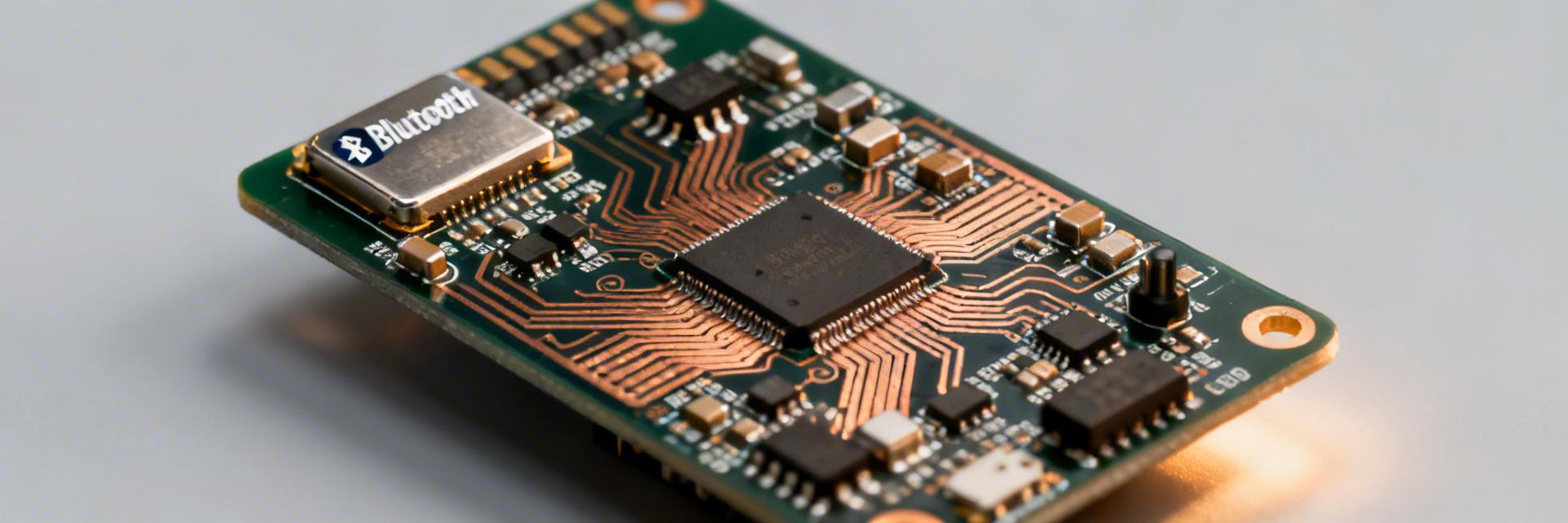
A Bluetooth heating controller PCBA integrates sensing, control logic, power management, actuator drivers, and radio connectivity on a compact PCB. Typical layouts include an MCU/SoC, power regulation, temperature sensor interfaces, relay or triac drivers, a Bluetooth radio with antenna, and optional secure elements. Benefit: Integrating these components onto a single board reduces final device size by 20-30% compared to modular designs.
| Feature | Standard Wi-Fi Controller | Optimized BLE PCBA |
|---|---|---|
| Standby Power | High (approx. 50-100mW) | Ultra-Low ( |
| BOM Cost | Premium ($$$) | Cost-Effective ($) |
| Commissioning | Complex Hub/Router setup | Direct Smartphone Pairing |
| Size Constraint | Bulky (Heat Dissipation) | Highly Compact (SoC focus) |
2 — Market Size & Growth: Key Data and Forecasts
Market data points to a robust addressable market for smart heating PCBAs. Consensus industry reports place the total addressable market (TAM) in the multi-hundreds of millions of units globally. Expected CAGRs typically range from mid-single digits to low-double digits. For PCBA planners, this means predictable volume growth, though segmentation between retrofit kits and OEM-embedded controllers will determine unit economics.
3 — Technology & Product Trends
Hardware design trends prioritize integration and thermal resilience. Designers are adopting integrated SoCs with on-chip BLE, low-power regulators, and high-temp passive components. Practical Impact: Using BLE 5.x allows for “Extended Range” modes, ensuring connectivity through thick basement walls where heating units are often located.
💡 Engineer’s Technical Insight
“When laying out a Bluetooth heating PCBA, the biggest pitfall is thermal drift affecting RF frequency stability. Always place the BLE crystal oscillator as far as possible from the high-current relay or power triac. Additionally, ensure a clear ground keep-out zone around the PCB antenna to maintain link budget.”
— Dr. Marcus Thorne, Senior Embedded Systems Architect
4 — Design & Manufacturing Best Practices
Choosing parts rated for continuous heat exposure is essential. Use high-temperature capacitors and resistors, and apply conformal coating where condensation is expected. Layout Guidance: Thermally isolate power stages and keep the RF region free of ground pours. DFM checks and assembly yield monitoring (X-ray, AOI) help avoid late-discovery solder issues.
5 — Product Archetypes & Use Cases
Hand-drawn illustration, not a precise schematic.
Smart Radiator Valve (TRV)
Compact PCBA with battery-optimized BLE for room-by-room temperature control.
Hand-drawn illustration, not a precise schematic.
Multi-Zone Floor Heating
High-reliability board with Bluetooth Mesh for multi-room synchronization.
6 — Go-to-Market Recommendations
Manufacturers should prioritize modular reference designs and early certification planning. For product managers, the focus must be on OTA (Over-The-Air) updates and installer UX. Tracking post-launch metrics like pairing success rates and return rates will reduce churn and drive adoption among end users.
Summary
- BOM Savings: Bluetooth heating controller adoption is rising due to lower module costs.
- Growth: US retrofit demand is a primary driver for smart HVAC PCBA diversity.
- Reliability: Hardware trends emphasize thermal isolation and SoC integration.
- GTM Strategy: Success depends on early certification and robust firmware OTA flows.
Frequently Asked Questions
What makes a Bluetooth heating controller PCBA different from a Wi-Fi thermostat board?
Bluetooth designs emphasize low idle power, simpler mobile commissioning, and smaller module BOMs. They are ideal for battery-operated valves and sensors where Wi-Fi would drain batteries too quickly.
How should manufacturers validate thermal reliability?
Validation must include thermal cycling and prolonged soak at upper operating limits (often 85°C to 105°C). High-temp rated passives and conformal coating are essential to prevent failure in high-humidity boiler environments.
What are the key market signals to monitor?
Track retrofit installation rates, BLE module pricing trends, and pairing success metrics from pilot deployments. These signals indicate the best timing for scaling production.