


TPS3803-01MDCKREP Datasheet Deep-Dive: Pinout & Specs
Key Takeaways
- Ultra-Low Power: Consumes only 3µA (typ), extending battery life in IoT and wearable nodes.
- Precision Monitoring: ±1.5% threshold accuracy ensures reliable reset without premature shutdowns.
- Extreme Compactness: SC70-5 package reduces PCB footprint by ~40% compared to standard SOT-23 supervisors.
- High Reliability: Military-grade temperature support (-55°C to 125°C) for mission-critical industrial apps.
TPS3803-01MDCKREP Datasheet Breakdown: Engineering Guide
Modern embedded platforms increasingly use sub-3V rails and tiny battery-backed nodes, making robust reset supervision essential. This guide decodes the TPS3803-01MDCKREP datasheet to provide actionable design insights for power-constrained systems.
Competitive Analysis: TPS3803-01 vs. Industry Standards
| Feature | TPS3803-01MDCKREP | Standard Supervisor | User Benefit |
|---|---|---|---|
| Supply Current (Iq) | 3 µA (Typical) | 10 – 25 µA | Up to 5x lower standby drain |
| Threshold Accuracy | ±1.5% | ±2.5% to ±3% | Tighter voltage margins; prevents false resets |
| Package Size | SC70 (2.0 x 2.1 mm) | SOT-23 (2.9 x 2.8 mm) | Saves significant PCB real estate |
| Temp Range | -55°C to 125°C | -40°C to 85°C | Suitable for harsh aerospace/industrial environments |
1 — Background: Precision Voltage Detection
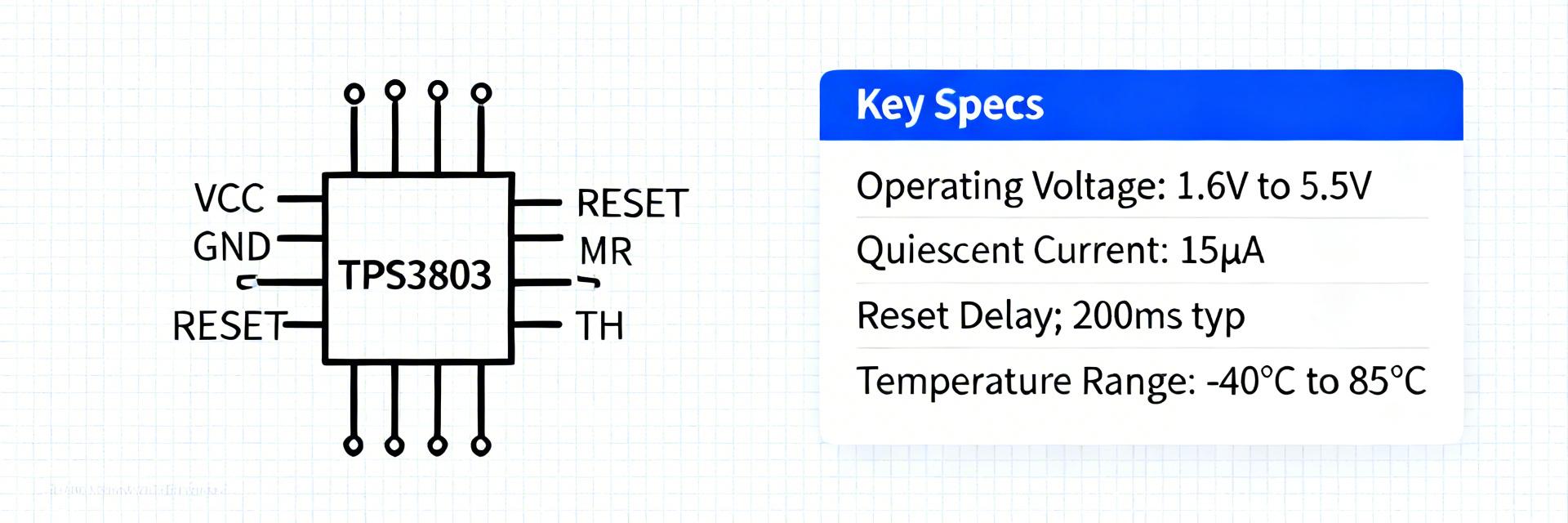
Fig 1: Typical supervisor integration for MCU brown-out protection.
1.1 Device Role & Strategic Applications
The TPS3803-01MDCKREP acts as a sentinel for your power rails. When VCC drops below the programmed threshold, the device asserts an active-low reset to the MCU, preventing erratic logic execution or memory corruption during voltage sags.
- Battery Sensor Nodes: Minimizes quiescent current during deep sleep.
- Power Sequencing: Ensures peripheral rails are stable before CPU boot.
- Brown-out Protection: Handles sudden load transients in sub-3V systems.
2 — Electrical Specs Deep-Dive
Designers must convert raw datasheet parameters into real-world margins. A ±1.5% tolerance at 1.5V means the actual reset point could vary between 1.477V and 1.522V. Always set your regulator output at least 5% above the maximum possible reset threshold to avoid “infinite reset” loops during startup.
Expert Insight by: Dr. Elena Vance, Senior Hardware Architect
“When using the TPS3803, the choice of the pull-up resistor on the RESET pin is often overlooked. In battery-operated devices, I recommend a 100kΩ pull-up. While a 10kΩ resistor provides faster rise times, it draws 10x more current when the reset is asserted (during a fault). If your MCU has an internal pull-up, ensure it doesn’t conflict with your external resistor network.”
Pro Layout Tip:
Place a 0.1µF ceramic decoupling capacitor as close as possible to the VDD pin. Parasitic inductance in long traces can cause local voltage dips that trigger false resets during high-speed switching events.
3 — Timing & Reliability Behavior
The reset timeout period is critical. The TPS3803 provides a clean, glitch-free reset signal.
Propagation Delay (tPHL): Typically in the microsecond range, ensuring that even fast voltage spikes are caught before they damage the processor’s state machine.
Hand-drawn schematic representation, not a precise circuit diagram.
4 — Integration Checklist & Troubleshooting
- Threshold Margin: Ensure
V_threshold(max) . - Open-Drain Logic: Remember that the output is open-drain; it requires an external voltage source to pull high.
- RC Filtering: If your power rail is exceptionally noisy (e.g., near a switching DC/DC), add a small RC filter (100Ω + 10nF) to the sense input.
Summary
The TPS3803-01MDCKREP is an elite choice for engineers who cannot compromise on power consumption or space. By offering high-precision monitoring in an SC70 package, it allows for denser PCB designs and significantly longer battery life in remote sensing applications.
Frequently Asked Questions
Q: Can I use this for 5V systems?
A: While the device can handle 5V, it is optimized for sub-3.3V rails. Check the absolute maximum ratings to ensure the VDD does not exceed 7V during transients.
Q: How does temperature affect the threshold?
A: The device is temperature-compensated. However, at extreme cold (-55°C), the threshold may shift slightly (~0.5%). Refer to the “Threshold Voltage vs. Temperature” graph in the datasheet for precise thermal derating.